Leveraging AI for Smarter Inbound Marketing: How Intelligent Automation Is Reshaping Customer Engagement
Discover how AI is transforming inbound marketing with personalization, automation, AI search optimization, and predictive analytics. Learn practical strategies to attract, engage, and convert more customers in 2026.

Sai Sabiksha
Founder
Your Customers Have Already Changed. Has Your Marketing?
Your Customers Have Already Changed. Has Your Marketing?
Imagine you're the founder of a growing SaaS company looking for a Customer Relationship Management (CRM) platform.
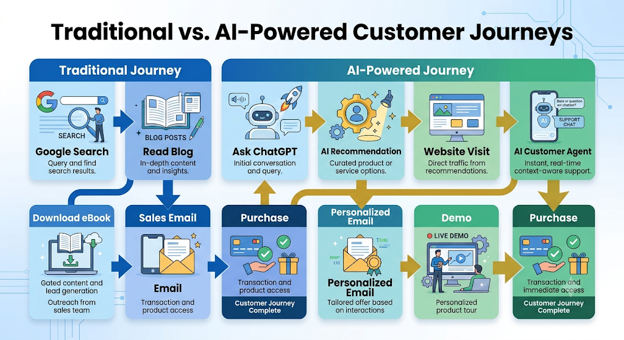
Five years ago, your buying journey probably looked something like this:
You opened Google, searched for "best CRM software," clicked through multiple websites, compared pricing pages, read customer reviews, and maybe downloaded a few comparison guides. After spending several hours researching, you finally scheduled a product demo.
Today, that journey looks remarkably different.
Instead of opening ten browser tabs, you ask an AI assistant:
"What's the best CRM for a growing startup with fewer than 50 employees?"
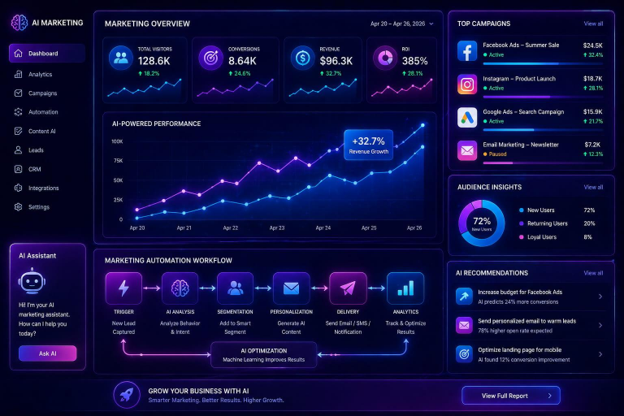
AI Assistant Query
Within seconds, AI summarizes the leading platforms, compares pricing, highlights key features, explains the pros and cons, and recommends the most suitable option based on your requirements.
Before you've even visited a company's website, Artificial Intelligence has already influenced your buying decision.
This shift represents one of the biggest changes in digital marketing services over the past decade.
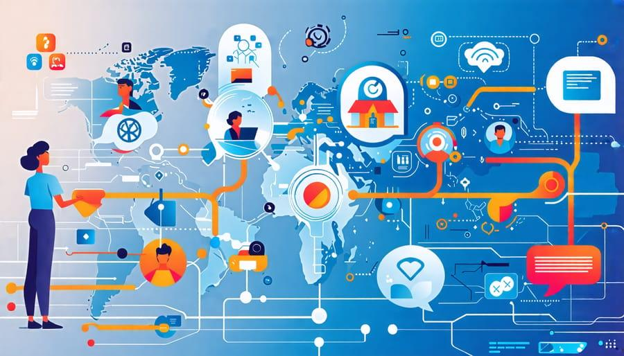
Customers no longer depend solely on search engines to discover brands. They're using AI assistants to find answers, compare products, evaluate services, and make purchasing decisions faster than ever before.
For marketers, this changes everything.
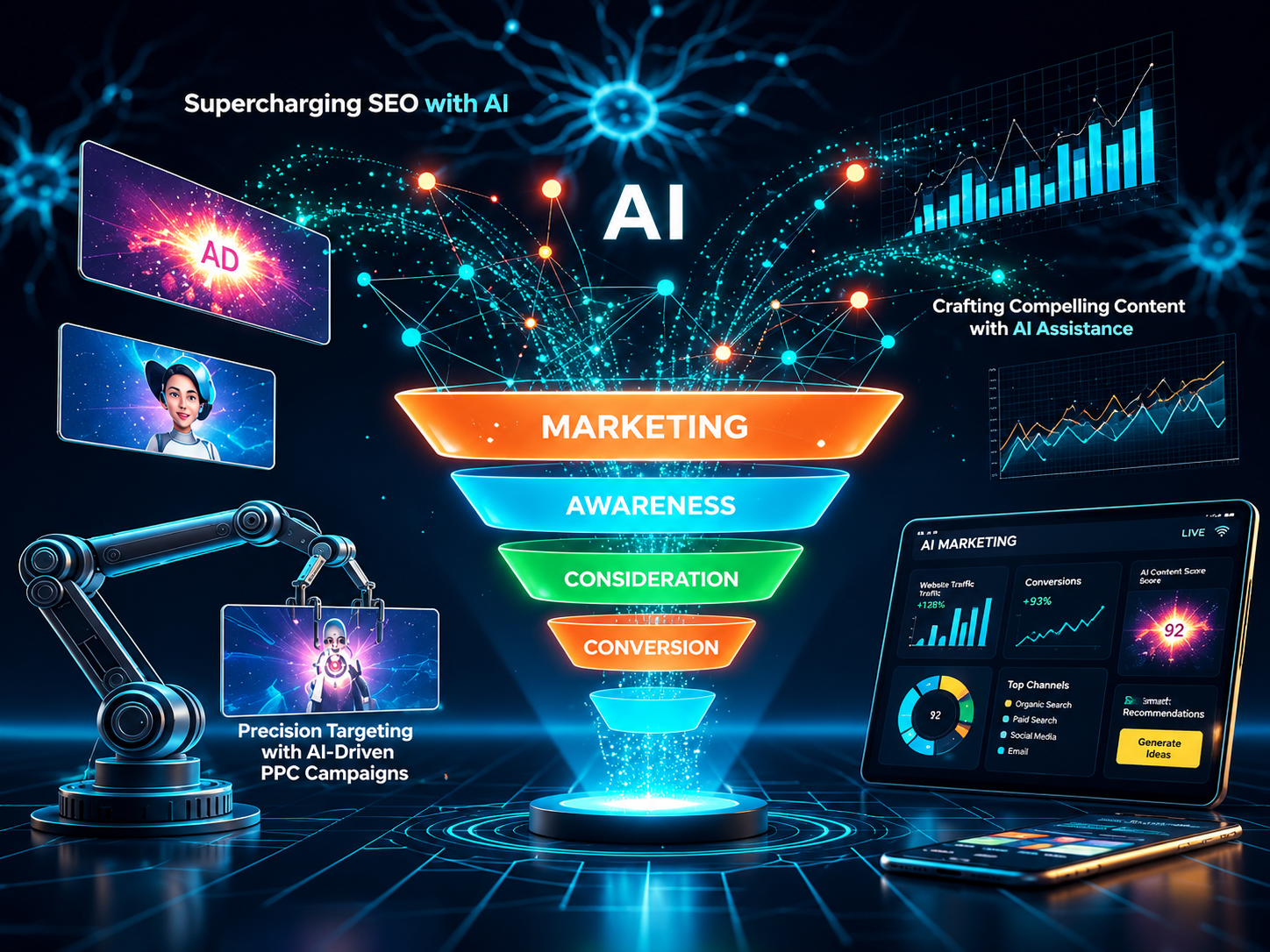
Businesses that once competed for the top position on Google's search results page must now think beyond traditional Search Engine Optimization (SEO). They need to create content that AI systems can understand, trust, and recommend. At the same time, they must deliver highly personalized experiences once visitors arrive on their websites.
This is where AI-powered inbound marketing is transforming the customer journey.
Artificial Intelligence isn't replacing inbound marketing—it's making it smarter.
Instead of spending hours manually qualifying leads, creating audience segments, sending follow-up emails, or analyzing campaign performance, marketing teams can now use AI to automate repetitive tasks, uncover valuable insights, and personalize every interaction at scale.
Leading platforms such as HubSpot Marketing Hub are already embracing this shift. From AI-powered search optimization and intelligent customer agents to predictive analytics and automated campaign management, AI is becoming deeply integrated into every stage of the inbound marketing process.
The result isn't simply faster marketing.
It's more relevant marketing.
It's marketing that understands customer intent, responds in real time, and helps businesses build stronger relationships long before a sales conversation begins.
In this guide, we'll explore how AI is reshaping inbound marketing, how industry leaders are applying it today, and what businesses can do to prepare for the future of customer engagement.
Inbound Marketing Is Evolving—And Customer Expectations Are Driving the Change
Inbound Marketing Is Evolving
Inbound marketing has always been built on a simple principle:
Help people before you sell to them.
Rather than interrupting potential customers with cold calls, intrusive advertisements, or mass email campaigns, inbound marketing focuses on attracting people through valuable content and meaningful experiences.
Businesses create blog articles, guides, webinars, videos, and educational resources that answer customer questions. As trust grows, visitors become leads, leads become customers, and satisfied customers become advocates.
For years, this strategy worked exceptionally well.
But today's customers expect much more than valuable content.
They expect businesses to understand their needs before they even ask.
Think about your own online experience.
When you visit Netflix, you don't see the same recommendations as everyone else.
Spotify creates playlists based on your listening habits.
Amazon recommends products based on your browsing history and previous purchases.
These personalized experiences have reshaped customer expectations across every industry.
People now expect businesses to:
- Recommend relevant content instead of generic information.
- Respond instantly to questions, regardless of the time of day.
- Remember previous interactions.
- Deliver personalized experiences across websites, email, and social media.
- Provide helpful guidance rather than overwhelming choices.
Meeting these expectations manually is almost impossible.
A marketing team might manage thousands—or even millions—of customer interactions every month. Without intelligent automation, delivering personalized experiences at this scale becomes incredibly difficult.
This is precisely why Artificial Intelligence has become such an important part of modern inbound marketing.
Rather than replacing marketers, AI helps them deliver the kind of customer experiences people now expect.
Why Traditional Inbound Marketing Is No Longer Enough
Let's consider a typical marketing workflow from just a few years ago.
A visitor discovers your blog through Google.
They read an article.
They download an eBook.
They complete a contact form.
Your marketing team manually reviews the lead.
An email campaign is scheduled.
Eventually, someone from sales reaches out.
While this process still exists, customer behavior has changed dramatically.
Today's buyers don't always follow a predictable journey.
Some discover your business through AI-generated recommendations.
Others arrive from LinkedIn after seeing thought leadership content.
Some interact with a chatbot before reading your blog.
Others compare multiple brands using AI assistants before ever visiting a website.
The customer journey has become more dynamic, more personalized, and significantly less linear.
As a result, marketers face several challenges:
Information Overload
Consumers have access to more content than ever before. Every day, thousands of new blog posts, videos, webinars, and white papers compete for attention.
Creating more content is no longer enough.
Businesses must create the right content for the right audience at the right time.
Rising Customer Expectations
Customers expect immediate answers.
If someone visits your website at 11:30 PM with an important question, they don't want to wait until the next business day for a response.
They expect assistance immediately.
AI-powered customer agents are helping businesses meet these expectations without requiring around-the-clock support teams.
Personalization at Scale
Sending the same email to every subscriber rarely produces outstanding results.
Modern customers expect personalized recommendations based on their interests, previous interactions, and stage in the buying journey.
Creating that level of personalization manually isn't practical.
AI makes it possible.
Data Is Growing Faster Than Humans Can Analyze
Marketing teams collect enormous amounts of information every day.
Website traffic. Campaign performance. Email engagement. Customer interactions. Social media activity. CRM records. Sales data.
While this information is incredibly valuable, manually identifying meaningful insights becomes increasingly difficult as businesses grow.
AI can process these datasets in seconds, uncovering trends that help marketers make faster and more informed decisions.
AI Isn't Replacing Inbound Marketing—It's Reinventing It
One of the biggest misconceptions surrounding Artificial Intelligence is that it's designed to replace marketers.
The reality is very different.
AI doesn't replace creativity.
It doesn't replace empathy.
It doesn't replace strategic thinking.
Instead, AI handles repetitive, data-intensive tasks so marketers can focus on what humans do best:
- Understanding customer needs.
- Building authentic relationships.
- Creating compelling stories.
- Developing innovative campaigns.
- Making strategic decisions.
Think of AI as an intelligent marketing assistant.
Imagine spending Monday morning reviewing campaign performance.
Instead of opening five dashboards and manually comparing metrics, AI instantly highlights:
- Which campaign generated the highest-quality leads.
- Which audience segment showed the strongest engagement.
- Which email subject line produced the highest open rate.
- Which landing page needs optimization.
- Which visitors are most likely to convert this week.
Rather than replacing the marketer, AI equips them with faster, more actionable insights.
The marketer still decides what to do next.
AI simply provides better information to support those decisions.
Coming Up Next
Now that we've explored why inbound marketing is evolving, the next section will focus on how AI is being applied in real-world marketing strategies.
We'll examine how leading platforms like HubSpot Marketing Hub are integrating AI into:
- AI Search Optimization (AEO)
- Intelligent lead capture
- Breeze Customer Agent
- Personalized email marketing
- Marketing Studio
- Smart audience segmentation
- Campaign automation
More importantly, we'll explore what every business—not just enterprise organizations—can learn from these innovations and how to apply them to create more meaningful customer experiences.
Ready to translate these insights into real operational efficiency?
Let's design and build your custom web applications, SaaS dashboards, or CRM integrations. Reach out to our solutions architect desk for a free feasibility review.