Leveraging AI for Smarter Inbound Marketing (Part 2): How AI Is Reinventing Every Stage
Learn how artificial intelligence is transforming search optimization, lead capture, customer service agents, and email marketing for inbound strategies.

Sai Sabiksha
Founder
Inbound marketing has always been about attracting the right audience, building trust, and converting visitors into loyal customers. But achieving that goal has become significantly more challenging.
Today's customers expect instant answers, personalized recommendations, and seamless digital experiences. They don't want generic emails, static landing pages, or long contact forms. They expect brands to understand their intent from the very first interaction.
Artificial Intelligence makes this possible.
Instead of treating every visitor the same, AI analyzes customer behavior in real time, identifies intent, and helps businesses deliver the right experience at exactly the right moment.
To understand how this works in practice, let's look at how one of the world's leading marketing platforms—HubSpot Marketing Hub—is embedding AI across the entire inbound marketing journey.
1. AI Search Optimization (AEO): Winning Customers Before They Visit Your Website
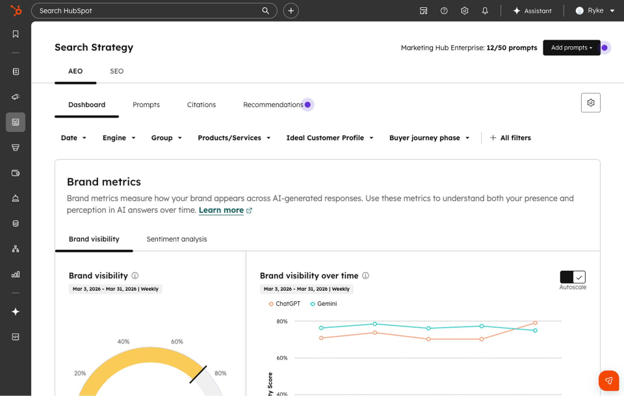
AI Search Optimization Dashboard
Brand Visibility Over Time
For years, marketers have focused on Search Engine Optimization (SEO) to improve rankings on Google.
But search behavior is changing.
Instead of typing short keywords like:
"best CRM software"
People now ask AI assistants complete questions such as:
"What's the best CRM for a growing startup with under 20 employees?"
or
"Which marketing software is best for B2B lead generation?"
AI tools like ChatGPT, Google AI Overviews, Microsoft Copilot, and Gemini summarize information before users even click on a website.
That means businesses have a new challenge.
It's no longer enough to rank on Google.
Your content also needs to be trustworthy enough for AI systems to reference and recommend.
This is where AI Search Optimization (AEO) comes into play.
Unlike traditional SEO, which focuses on ranking webpages, AEO focuses on making content understandable, authoritative, and useful for AI-powered search experiences.
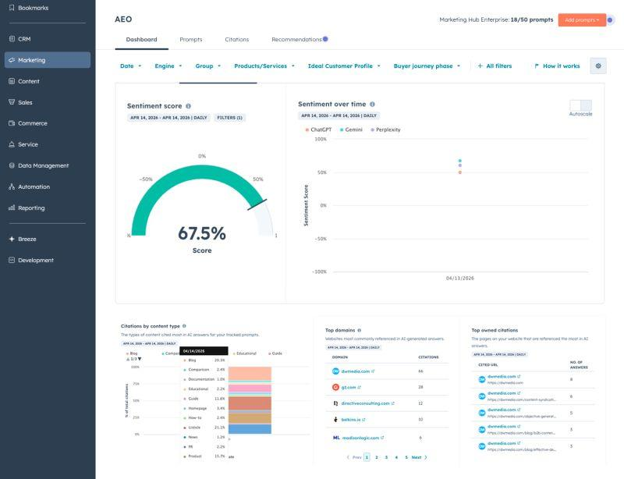
Recognizing this shift, HubSpot Marketing Hub introduced AI Search Optimization (AEO) to help businesses monitor how often their brands appear in AI-generated answers and provide recommendations to improve visibility.
Why This Matters
Imagine two companies selling the same product.
Both have well-designed websites.
Both invest in content marketing.
A potential customer asks ChatGPT:
"Which marketing platform offers the best AI automation for small businesses?"
If AI mentions Company A but not Company B, Company A has already gained an advantage before the customer even visits a website.
The future of inbound marketing starts long before someone lands on your homepage.
Businesses that optimize for AI-driven discovery today will be better positioned as conversational search continues to grow.
2. Intelligent Lead Capture: Turning Anonymous Visitors into Sales Opportunities
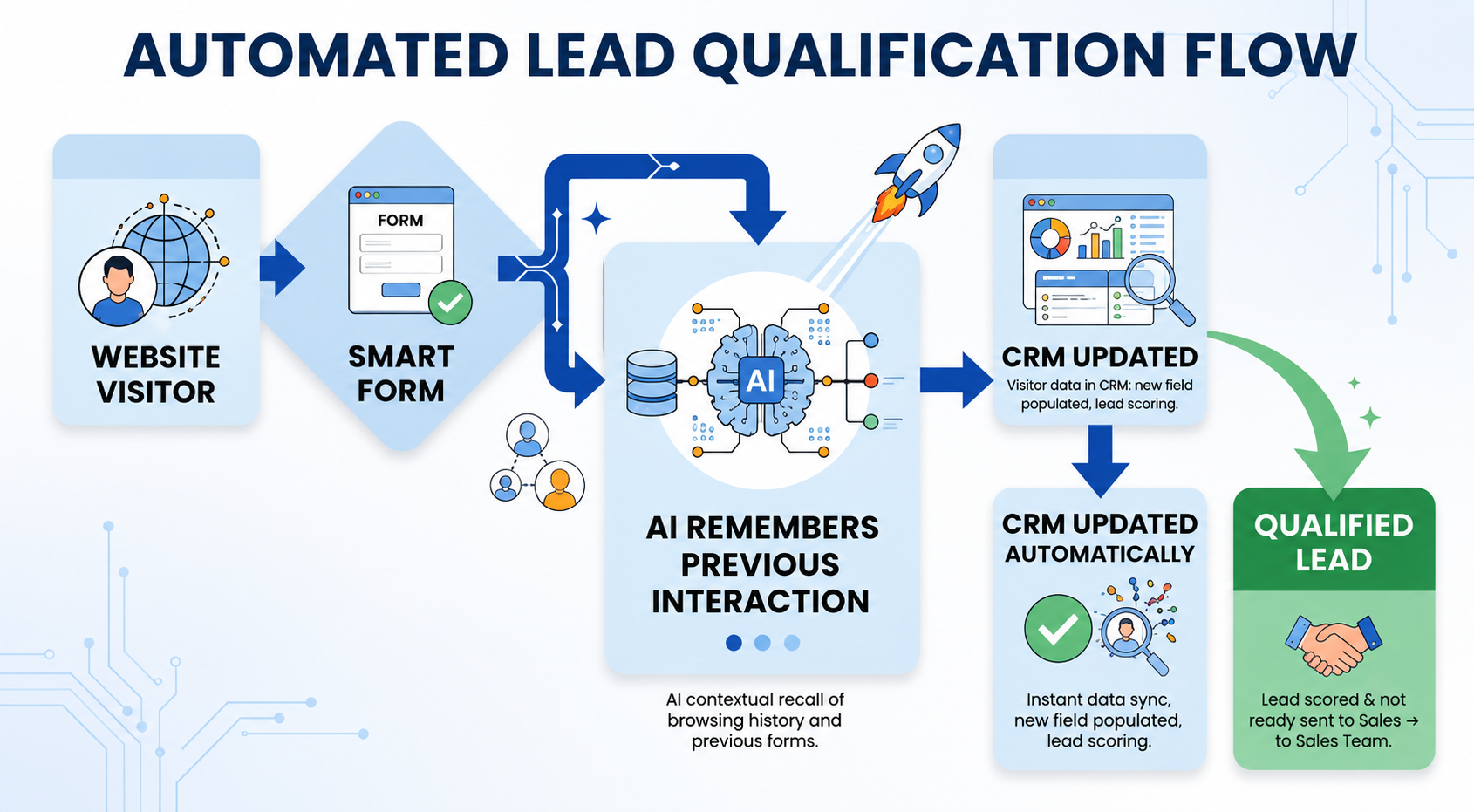
Automated Lead Qualification Flow
Getting people to visit your website is only half the battle.
The bigger challenge is converting those visitors into qualified leads.
Traditional lead generation often depends on static forms that ask every visitor the same questions.
- Name.
- Email.
- Company.
- Phone number.
While this approach still works, it creates friction.
Some visitors abandon long forms.
Others aren't ready to share personal information.
Many simply leave without taking any action.
Modern AI-powered marketing platforms solve this problem by making lead capture more intelligent.
HubSpot's smart forms are designed to adapt based on visitor behavior and CRM data, helping businesses capture higher-quality leads while reducing unnecessary friction.
Instead of asking every question at once, AI can progressively collect information over multiple interactions.
This creates a smoother customer experience while giving marketing and sales teams richer customer profiles over time.
Think About It This Way
Imagine someone visits your website for the first time.
Instead of asking for ten pieces of information, you ask for only an email address in exchange for a useful guide.
A week later, the same visitor returns.
This time, the form already recognizes them and asks for their company name.
On their third visit, it asks about their business goals.
The experience feels effortless because AI remembers previous interactions.
The business collects better data without overwhelming the visitor.
That's the difference between traditional forms and intelligent lead capture.
3. AI Customer Agents: The Sales Representative That Never Sleeps
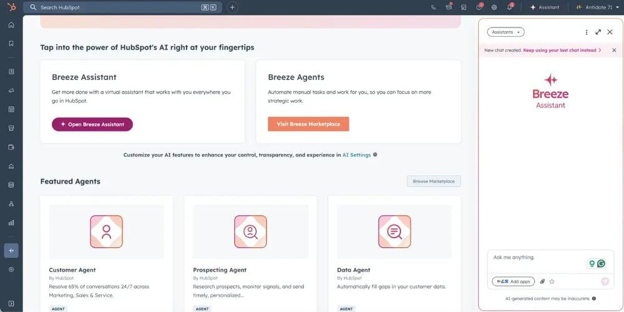
Breeze Assistant
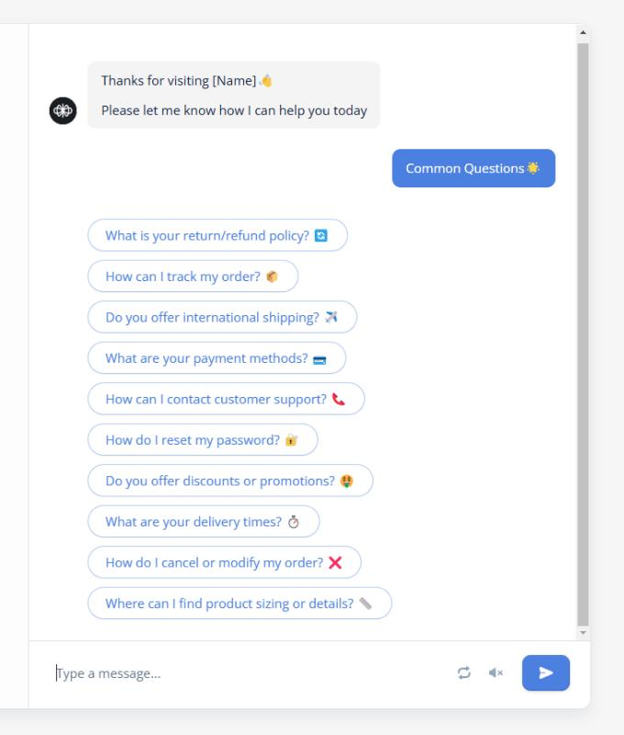
Customer Interaction via AI Agent
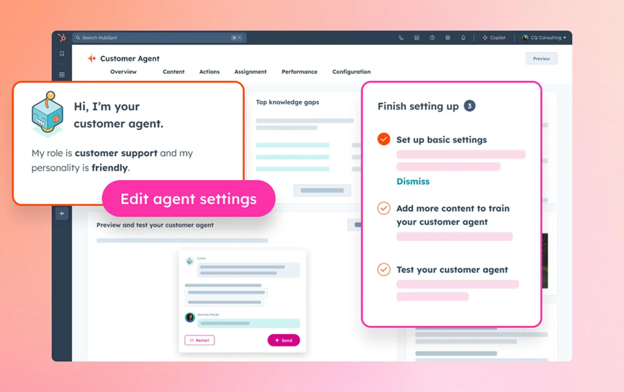
Agent Settings
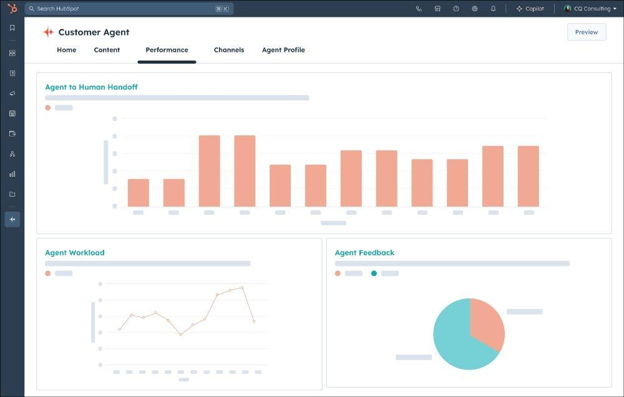
Customer Agent Performance
Imagine it's 11:45 PM.
A potential customer is exploring your pricing page.
They're interested.
They're comparing your solution with competitors.
They have one important question before requesting a demo.
Unfortunately, your sales team has already gone home.
In many businesses, this is where opportunities disappear.
Visitors leave.
Competitors respond first.
Potential revenue is lost.
AI-powered customer agents solve this problem by engaging visitors the moment they need assistance.
Rather than functioning like the rule-based chatbots of the past, modern AI assistants understand natural language, provide relevant responses, recommend helpful resources, and qualify leads before involving human sales representatives.
One example is HubSpot's Breeze Customer Agent.
Instead of simply answering frequently asked questions, it helps businesses:
- Capture visitor interest
- Recommend relevant content
- Guide users toward the next step
- Convert website traffic into sales-ready leads
The value isn't just speed.
It's availability.
Whether someone visits your website during office hours or late at night, AI ensures they receive immediate assistance.
For businesses operating across multiple time zones, this can significantly improve customer experience and lead conversion.
4. Personalization at Scale: Making Every Visitor Feel Understood
Think about the last time you logged into Netflix.
The homepage you saw wasn't the same as everyone else's.
Your recommendations were based on what you had previously watched.
Spotify does the same.
Amazon does it.
Even LinkedIn personalizes your feed.
Customers now expect every digital experience to feel this relevant.
Yet many business websites still show the same homepage, the same content, and the same call-to-action to every visitor.
That's a missed opportunity.
AI enables businesses to personalize experiences without manually creating hundreds of different website versions.
For example:
- A first-time visitor might see an introductory guide.
- A returning visitor could see a product demo.
- Existing customers might receive advanced resources.
- Enterprise buyers may be directed toward case studies.
- Small business owners could receive pricing information.
Every visitor receives content aligned with their interests and stage in the buying journey.
This level of personalization not only improves user experience but also increases engagement and conversion rates.
5. AI-Powered Email Marketing: Beyond "Dear Customer"
Email marketing continues to deliver one of the highest returns on investment among digital marketing services channels.
However, generic email campaigns no longer meet customer expectations.
Imagine sending the same promotional email to 50,000 subscribers.
Some recipients are new prospects.
Others have been customers for years.
A few are actively evaluating your product.
Many haven't engaged with your brand in months.
Treating them all the same rarely produces the best results.
AI solves this challenge by personalizing email campaigns based on customer behavior and CRM data.
With AI-powered email tools, marketers can:
- Recommend content based on previous interactions.
- Personalize subject lines.
- Optimize send times.
- Suggest relevant products or services.
- Generate tailored email copy.
For example, HubSpot's AI-powered email capabilities help businesses automate manual tasks while delivering one-to-one personalized experiences using customer data stored within the CRM.
Instead of sending mass emails, businesses create conversations that feel individually relevant.
And that's exactly what modern customers expect.
Up Next in Part 3
So far, we've explored how AI helps businesses:
- Get discovered through AI-powered search.
- Capture higher-quality leads.
- Engage visitors with intelligent customer agents.
- Personalize website experiences.
- Deliver smarter email campaigns.
Ready to translate these insights into real operational efficiency?
Let's design and build your custom web applications, SaaS dashboards, or CRM integrations. Reach out to our solutions architect desk for a free feasibility review.