Mobile App Development Services: Complete 2026 Guide, Process & Cost
Discover mobile app development services for iOS and Android. Explore development processes, technology stacks, costs, native vs. cross-platform options, and how to choose the right development partner.
Key Takeaway
Discover mobile app development services for iOS and Android. Explore development processes, technology stacks, costs, native vs. cross-platform options.

Sai Sabiksha
Founder
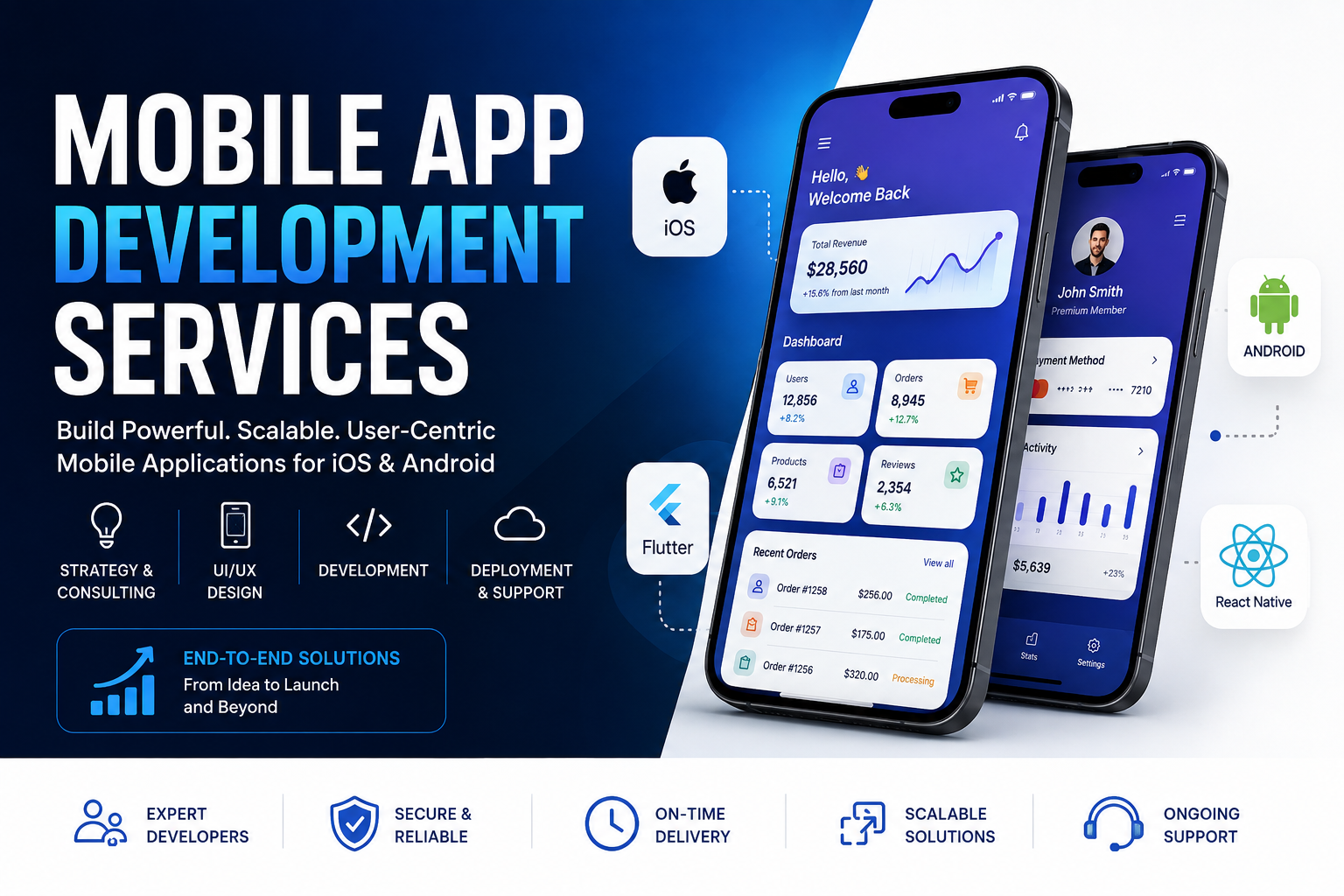
Mobile applications have become a core part of how businesses engage customers, automate operations, generate revenue, and deliver digital experiences.
Mobile app development services cover the complete lifecycle of building, launching, maintaining, and scaling mobile applications for platforms such as iOS and Android. These services can include product discovery, UI/UX design, native or cross-platform development, backend integration, testing, deployment, security, analytics, and post-launch maintenance.
What Are Mobile App Development Services?
Mobile app development services are professional services used to plan, design, develop, test, deploy, and maintain applications for smartphones and tablets.
A modern mobile app development project may include:
- Product discovery and business analysis
- UI/UX design and prototyping
- iOS app development
- Android app development
- Cross-platform application development
- Backend and API development
- Database integration
- Cloud integration
- Third-party API integration
- Payment gateway integration
- Authentication and authorization
- Quality assurance and testing
- App Store and Google Play deployment
- Analytics and monitoring
- Mobile app maintenance and support
Why Businesses Invest in Mobile App Development
Direct Customer Engagement
Mobile applications provide businesses with a direct channel to communicate with customers through notifications, personalized content, offers, and in-app experiences.
Better Customer Experience
Applications can provide faster and more personalized interactions through features such as push notifications, one-click payments, personalized dashboards, location-based services, offline functionality, and in-app messaging.
Business Process Automation
- Employee management
- Inventory tracking
- Sales operations
- Field service management
- Customer support
- Expense management
- Order processing
New Revenue Channels
- Subscription
- In-app purchases
- Transaction fees
- Advertising
- Marketplace commissions
- Premium features
Competitive Advantage
A well-designed mobile application can help businesses differentiate themselves by providing functionality and convenience that competitors may not offer.
Core Types of Mobile App Development Services
iOS App Development Services
- Swift
- SwiftUI
- Xcode
- Apple SDKs
- REST APIs
- GraphQL
- Cloud services
Android App Development Services
- Kotlin
- Android Studio
- Jetpack
- Jetpack Compose
- Android SDK
- REST APIs
- Firebase
- Cloud platforms
Cross-Platform App Development Services
- Flutter
- React Native
- Faster development
- Shared codebase
- Reduced duplicated development effort
- Efficient multi-platform deployment
Flutter App Development Services
- Faster development
- Consistent UI
- Cross-platform deployment
- Reusable components
- Rapid MVP development
React Native Development Services
- Reusable application logic
- Shared development resources
- Faster product development
- Integration with JavaScript ecosystems
Enterprise Mobile App Development Services
- CRM systems
- ERP platforms
- HR systems
- Payment systems
- Business intelligence platforms
- Cloud infrastructure
- Internal APIs
- Identity providers
UI/UX Design and Mobile App Development
- User personas
- User journeys
- Information architecture
- Navigation
- Accessibility
- Interaction design
- Mobile usability
- Prototyping
- Usability testing
End-to-End Mobile App Development Process
- Discovery and Requirement Analysis: Understand business goals, target audiences, core features, competitors, integrations, security requirements, budget, and launch objectives.
- Product Architecture and Technology Planning: Define the technology stack, frontend framework, backend, database, APIs, cloud infrastructure, authentication, integrations, security, and analytics.
- UI/UX Design and Prototyping: Create user flows, wireframes, interactive prototypes, visual designs, and design systems.
- Frontend and Backend Development: Develop mobile interfaces, APIs, authentication, business logic, databases, payments, notifications, and other backend functionality.
- API and Third-Party Integration: Integrate the mobile app with existing CRMs, ERPs, payment gateways, and backend services.
- Quality Assurance and Testing: Perform functional, security, performance, and cross-device testing to ensure reliability.
- Deployment and App Store Optimization: Publish the application on the App Store and Google Play while adhering to guidelines.
- Post-Launch Maintenance and Scaling: Continuously monitor application performance and push regular updates.
How Much Do Mobile App Development Services Cost?
Mobile app development costs vary based on features, complexity, platform, integrations, security requirements, development team, and location.
- Simple MVP: $10,000–$30,000+ - Basic authentication, limited screens, standard APIs
- Mid-Level App: $30,000–$80,000+ - Custom UI, APIs, payments, notifications, admin features
- Complex Application: $80,000–$150,000+ - Advanced integrations, real-time features, cloud infrastructure
- Enterprise Application: $150,000+ - Complex workflows, security, integrations, scalability
Native vs. Cross-Platform App Development
Choosing between native (Swift/Kotlin) and cross-platform (Flutter/React Native) development depends on your budget, timeline, and performance requirements. Native provides the highest performance and deepest OS integration, whereas cross-platform allows a single codebase to deploy on both iOS and Android, lowering development costs and accelerating time-to-market.
How AI Is Changing Mobile App Development in 2026
AI-assisted development is changing how software teams plan, develop, test, and maintain mobile applications.
- Code generation
- Code completion
- Documentation
- Test generation
- Bug analysis
- Refactoring
- API development
- Data analysis
- UI prototyping
- Developer productivity
- System architecture
- Security decisions
- Product strategy
- Performance optimization
- Code review
- Data privacy
- Compliance
- Complex debugging
Security Considerations for Mobile Applications
- Secure authentication
- Role-based access control
- Encryption
- Secure API communication
- Token management
- Input validation
- Secure data storage
- Dependency management
- Logging and monitoring
- Vulnerability testing
- Secure payment processing
- GDPR
- HIPAA
- SOC 2
- PCI DSS
How to Choose the Right Mobile App Development Company
Review Their Portfolio
Look for projects similar to your application in terms of industry, complexity, platform, integrations, user scale, and security requirements.
Evaluate Technical Expertise
- Swift
- Kotlin
- Flutter
- React Native
- Node.js
- APIs
- Cloud platforms
- Databases
- DevOps
- AI integrations
Understand Their Development Process
- Requirements
- Architecture
- Design
- Development
- Testing
- Deployment
- Communication
- Documentation
- Maintenance
Check Security Practices
- Secure coding
- Authentication
- Authorization
- Encryption
- API security
- Vulnerability testing
- Access control
- Data protection
Clarify Intellectual Property Ownership
- Source code
- Designs
- Documentation
- Databases
- Application assets
- Custom-developed intellectual property
Evaluate Post-Launch Support
- Bug fixing
- Platform updates
- Security patches
- Performance improvements
- Feature development
- Infrastructure scaling
Mobile App Development Engagement Models
Fixed-Price Development
- Clearly defined projects
- Smaller applications
- Projects with stable requirements
Time and Materials
- Flexible scope
- Evolving products
- Startups
- Products with changing requirements
Dedicated Development Team
- Long-term product development
- Continuous feature delivery
- Complex applications
Mobile App Development Timeline
A simple application may take several weeks to a few months, while complex applications can take many months of design, development, testing, integration, and deployment.
A typical lifecycle is:
Discovery → Design → Architecture → Development → Testing → Deployment → Maintenance
Benefits of Working With a Professional Mobile App Development Partner
- Experienced developers
- Product and UX expertise
- Faster development
- Scalable architecture
- Quality assurance
- Security expertise
- Cloud integration
- Continuous maintenance
- Technical consulting
Mobile App Development Services for Different Industries
Healthcare
- Patient applications
- Appointment management
- Telemedicine
- Health tracking
- Provider applications
Fintech
- Digital banking
- Payments
- Personal finance
- Lending
- Investment platforms
Ecommerce
- Shopping applications
- Product discovery
- Payments
- Order tracking
- Loyalty programs
Education
- Learning platforms
- Student applications
- Online courses
- Assessments
- Communication tools
Logistics
- Delivery tracking
- Driver applications
- Fleet management
- Route optimization
RealEstate
- Property discovery
- Agent applications
- Virtual tours
- Property management
Manufacturing
- Field operations
- Inventory management
- Production monitoring
- Employee workflows
What Should an MVP Include?
- User registration
- Login
- User profile
- Core product functionality
- Basic notifications
- Payment functionality where required
- Analytics
- Admin dashboard
Ready to translate these insights into real operational efficiency?
Let's design and build your custom web applications, SaaS dashboards, or CRM integrations. Reach out to our solutions architect desk for a free feasibility review.
Frequently Asked Questions
Mobile app development costs vary based on features, complexity, platform, integrations, security requirements, development team, and location. A simple MVP may cost tens of thousands of dollars, while complex enterprise applications can cost significantly more.
The typical process includes discovery, requirements analysis, architecture, UI/UX design, frontend and backend development, integration, testing, deployment, and maintenance.
A simple application may take several weeks to a few months, while complex applications can take many months. The timeline depends on features, platforms, integrations, design complexity, testing requirements, and team size.
Native development is suitable for highly specialized platform functionality and maximum platform optimization. Cross-platform development can be suitable when businesses want to efficiently target multiple platforms.
Yes. Businesses can build separate native applications for iOS and Android or use cross-platform technologies such as Flutter or React Native.
Yes. Mobile applications can integrate REST APIs, GraphQL APIs, payment gateways, maps, authentication services, CRM systems, cloud services, AI platforms, analytics tools, and other third-party services.
Source-code ownership should be explicitly defined in the development agreement. Businesses should clarify ownership of source code, designs, documentation, databases, and other project-specific intellectual property.
Yes. Mobile applications require ongoing maintenance for security updates, operating system compatibility, bug fixes, dependency updates, performance improvements, and new features.
Yes. AI can be integrated into mobile applications for conversational assistants, recommendations, document processing, image analysis, personalization, search, summarization, and automation.
Evaluate a company's relevant portfolio, technical expertise, development process, security practices, communication approach, pricing model, client references, intellectual property terms, and post-launch support capabilities.