
Leveraging AI for Smarter Inbound Marketing (Part 4): Preparing Your Business for an AI-First Future
Discover how to prepare your business for an AI-first future, including practical adoption roadmaps and lessons from HubSpot's AI strategy.

Sai Sabiksha
Founder
Artificial Intelligence is no longer a "nice-to-have" technology reserved for large enterprises. It's quickly becoming a core part of how businesses attract customers, build relationships, and drive growth.
The good news? You don't need to overhaul your entire marketing strategy overnight.
The most successful companies aren't trying to automate everything at once. Instead, they're identifying repetitive tasks, improving customer experiences one step at a time, and using AI where it creates the most value.
If you're wondering where to begin, start with the fundamentals.
1. Audit Your Current Marketing Process
Before investing in new AI tools, take a step back and evaluate your existing inbound marketing strategy.
Ask yourself:
- Where are we spending the most manual effort?
- Which tasks are repetitive?
- Where do leads typically drop off?
- Which campaigns consistently perform well?
- What customer questions are asked repeatedly?
These answers will help you identify where AI can deliver immediate value.
For example:
- If your sales team spends hours qualifying leads, consider AI-powered lead scoring.
- If customers frequently ask the same questions, an AI customer agent can provide instant support.
- If your marketing team struggles to personalize email campaigns, AI-driven email automation may be the right place to start.
AI should solve business problems—not create new ones.
Build a Strong Data Foundation
Every AI system is only as good as the data behind it.
If your CRM contains duplicate contacts, outdated information, or incomplete customer records, AI recommendations won't be as effective.
Before implementing AI:
- Clean your CRM data.
- Remove duplicate contacts.
- Standardize customer information.
- Connect your marketing and sales platforms.
- Ensure compliance with privacy regulations such as GDPR or local data protection laws.
Reliable data leads to better personalization, more accurate insights, and smarter automation.
Start Small, Then Scale
One of the biggest misconceptions about AI adoption is that it requires a complete transformation from day one.
In reality, most successful businesses start with one or two high-impact use cases.
A practical roadmap might look like this:
Phase 1:
- Automate email workflows.
- Introduce AI-powered chat support.
- Improve lead capture forms.
Phase 2:
- Implement predictive lead scoring.
- Personalize website experiences.
- Segment audiences using AI.
Phase 3:
- Optimize AI search visibility.
- Build customer journey analytics.
- Use predictive insights to improve marketing ROI.
This phased approach allows teams to gain confidence, measure results, and expand AI capabilities over time.
AI Doesn't Replace Marketers—It Elevates Them
One concern still surfaces in almost every AI discussion:
"Will AI replace marketing jobs?"
The evidence suggests something different.
AI excels at:
- Processing data
- Automating repetitive tasks
- Identifying patterns
- Generating first drafts
- Providing recommendations
Humans excel at:
- Building trust
- Understanding emotions
- Creating memorable brand stories
- Solving complex business problems
- Making ethical decisions
- Thinking creatively
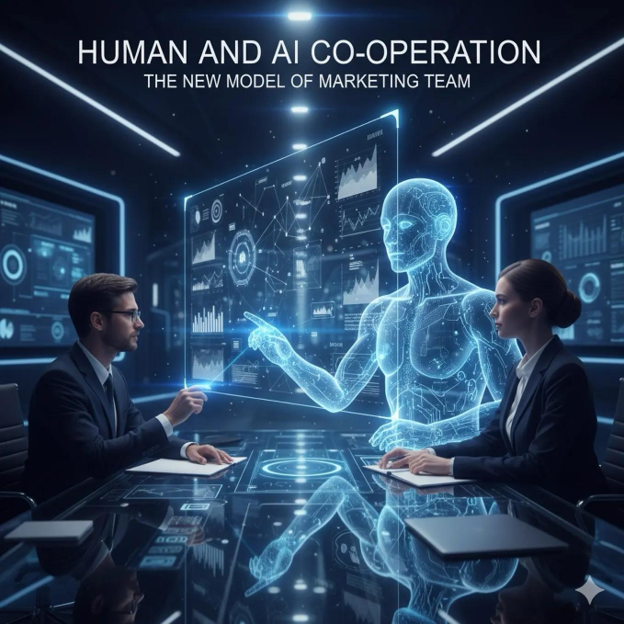
The future of marketing isn't AI versus humans.
It's AI working alongside marketers to help them make better decisions and create more meaningful customer experiences.
Lessons Every Business Can Learn from HubSpot's AI Strategy
One reason HubSpot continues to lead the inbound marketing space is its focus on solving customer problems rather than simply adding AI features.
Looking at its approach reveals several practical lessons any business can apply.
Focus on Intent, Not Just Traffic
More visitors don't automatically mean more customers.
Understanding why someone visits your website is often more valuable than simply increasing page views.
AI helps identify buying intent, allowing businesses to engage the right prospects at the right time.
Personalization Creates Better Experiences
Customers don't want to feel like they're receiving the same message as everyone else.
Whether it's an email, a landing page, or a chatbot conversation, personalization makes interactions more relevant—and relevance drives engagement.
Use Data to Improve Decisions
Successful marketers don't rely on assumptions.
They test, measure, learn, and improve.
AI accelerates this process by turning large volumes of customer data into actionable insights that help teams continuously optimize campaigns.
Keep Humans at the Center
Technology should enhance relationships, not replace them.
The brands that stand out will be those that combine intelligent automation with empathy, transparency, and genuine customer care.
What This Means for Businesses Like SyncTechn's Clients
For businesses looking to grow through digital channels, AI presents an opportunity to build more efficient and customer-focused marketing systems.
At SyncTechn, we believe AI should support business goals—not complicate them.
Whether it's implementing intelligent chatbots, integrating AI with CRM systems, automating lead nurturing, or improving customer insights through predictive analytics, the objective remains the same:
Help businesses create better customer experiences while improving operational efficiency.
Every organization's AI journey will be different, but the most successful implementations share one characteristic—they solve real customer problems.
Conclusion
Inbound marketing has always been about earning attention rather than demanding it.
Artificial Intelligence doesn't change that principle—it strengthens it.
Today's buyers expect businesses to understand their needs, respond quickly, and provide relevant experiences across every stage of the customer journey. AI gives marketers the ability to meet those expectations at a scale that simply wasn't possible a few years ago.
As we've explored throughout this guide, AI is influencing every stage of inbound marketing:
- Helping brands become more visible in AI-powered search.
- Capturing and qualifying high-intent leads.
- Personalizing content and email campaigns.
- Automating repetitive marketing tasks.
- Providing deeper customer insights through analytics.
- Measuring marketing performance with greater accuracy.
Platforms like HubSpot Marketing Hub demonstrate how these capabilities can work together within a unified ecosystem. But technology alone isn't the competitive advantage.
The real advantage comes from how businesses use it.
Organizations that combine AI with strong strategy, valuable content, and a genuine commitment to customer success will be better positioned to adapt as buyer behavior continues to evolve.
The future of inbound marketing won't be defined by automation alone.
It will be defined by businesses that use AI to create experiences that feel more personal, more relevant, and ultimately, more human.
Research & Sources
This article is based on publicly available research, product documentation, and industry insights from leading organizations in AI, inbound marketing, and digital customer engagement. The following resources were referenced to ensure the accuracy of concepts, product capabilities, and industry trends discussed throughout this article.
Research Disclaimer
The information presented in this article is based on publicly available resources, official product documentation, and industry research available at the time of writing. Product features, capabilities, pricing, and performance metrics may change over time. Readers are encouraged to refer to the respective official websites for the most up-to-date information.
Author's Note
This article provides an independent analysis of how Artificial Intelligence is transforming inbound marketing. Any references to third-party platforms, including HubSpot, are made solely for educational and informational purposes to illustrate current industry practices and are not intended as endorsements or promotional content.
Ready to translate these insights into real operational efficiency?
Let's design and build your custom web applications, SaaS dashboards, or CRM integrations. Reach out to our solutions architect desk for a free feasibility review.
Frequently Asked Questions
AI-powered inbound marketing combines traditional inbound marketing strategies with artificial intelligence to improve lead generation, personalize customer experiences, automate repetitive tasks, and optimize campaign performance.
AI analyzes customer behavior, identifies high-intent visitors, personalizes lead capture forms, automates lead qualification, and helps sales teams prioritize prospects most likely to convert.
No. AI is designed to assist marketers by automating repetitive tasks and providing insights. Human creativity, strategic thinking, and relationship-building remain essential for successful marketing.
Some of the key benefits include: Better personalization, Faster customer engagement, Smarter lead qualification, Improved campaign performance, Enhanced marketing analytics, Increased operational efficiency, and Better return on marketing investment (ROI).
Start with practical, high-impact use cases such as AI-powered chatbots, email automation, CRM integration, lead scoring, or marketing analytics. Focus on solving one business challenge at a time before expanding your AI strategy.