Custom Software Development Company: The Complete Guide to Building Scalable Business Solutions
Partner with a custom software development company to build scalable, secure, and business-focused software solutions tailored to your unique requirements.

Sai Sabiksha
Founder

In today's digital-first world, businesses need software that aligns perfectly with their unique processes, goals, and customer expectations. While off-the-shelf software can address common business needs, it often lacks the flexibility required to support long-term growth and innovation.
A custom software development company helps organizations design, build, deploy, and maintain software solutions tailored specifically to their business requirements. Whether you're a startup launching a new product, an SME streamlining operations, or an enterprise modernizing legacy systems, custom software provides the flexibility and scalability needed to stay competitive.
This guide explores what custom software development is, its benefits, development process, technologies, use cases, and how to choose the right custom software development partner.
What is a Custom Software Development Company?
A custom software development company specializes in creating software solutions designed exclusively for a specific organization or business. Unlike ready-made software, custom applications are developed to solve unique business challenges and support specific workflows.
Custom software can include:
- Enterprise applications
- Customer portals
- CRM systems
- ERP software
- Inventory management systems
- Mobile applications
- Web applications
- AI-powered business solutions
- Workflow automation platforms
- SaaS products
The primary goal is to deliver software that aligns perfectly with business objectives while remaining scalable for future growth.
Why Businesses Choose Custom Software Development
Every business operates differently. Generic software often forces organizations to adapt their processes to fit the software instead of the other way around.
Custom software allows businesses to build solutions around their own workflows.
Key Benefits
- Designed specifically for your business
- Higher operational efficiency
- Improved security
- Better scalability
- Easier third-party integrations
- Enhanced customer experience
- Long-term cost savings
- Competitive business advantage
Instead of paying for unnecessary features, businesses invest in exactly what they need.
Custom Software vs Off-the-Shelf Software
Understanding the difference helps organizations make better investment decisions.
| Feature | Custom Software | Off-the-Shelf Software |
|---|---|---|
| Customization | Fully customizable | Limited customization |
| Initial Cost | Higher | Lower |
| Scalability | Excellent | Limited |
| Ownership | Full ownership | Vendor controlled |
| Security | Business-specific | General security |
| Integration | Easy | May require additional tools |
| Maintenance | Tailored support | Vendor schedule |
Although custom software requires a larger initial investment, it provides significantly greater long-term value.
Types of Custom Software Solutions
A custom software development company can build different types of applications depending on business requirements.
Enterprise Software
Designed to automate large-scale business operations including HR, finance, procurement, and operations.
Examples include:
- ERP systems
- HR management
- Accounting platforms
- Business intelligence dashboards
Web Application Development
Modern businesses rely heavily on web applications for customer engagement and internal operations.
Examples include:
- Customer portals
- Booking systems
- Learning management systems
- Healthcare portals
- eCommerce platforms
Custom Mobile App Development
Mobile applications improve customer engagement and workforce productivity.
Platforms include:
- Android
- iOS
- Flutter
- React Native
CRM Development
Custom CRM software helps businesses manage customer relationships more effectively.
Features include:
- Lead management
- Sales tracking
- Customer communication
- Marketing automation
- Reporting dashboards
SaaS Product Development
Many startups choose custom software development companies to build Software-as-a-Service products.
Examples include:
- Project management platforms
- HR software
- Accounting software
- Online collaboration tools
Our Custom Software Development Process
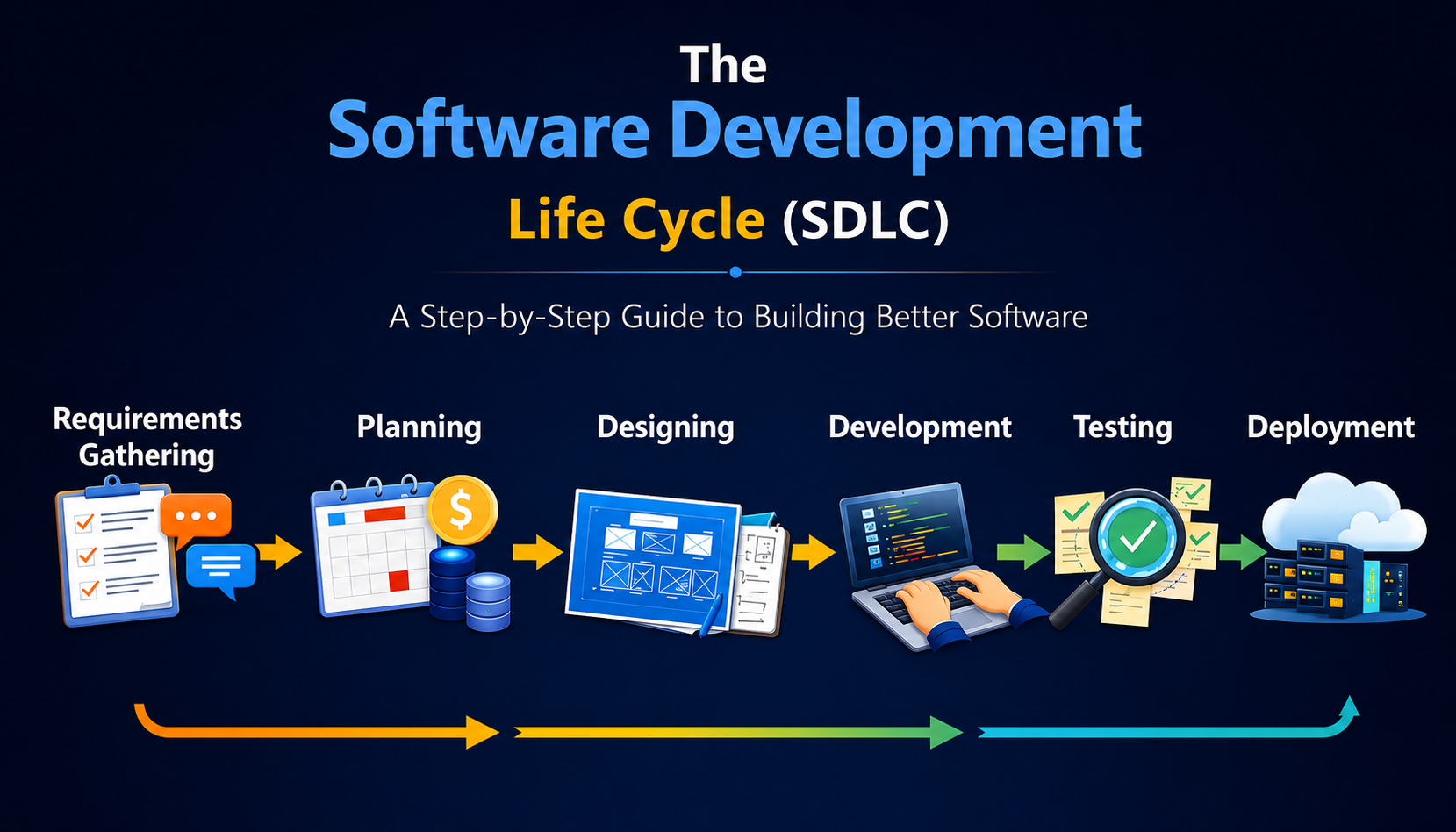
Our Custom Software Development Process
Professional custom software development follows a structured approach to ensure quality, scalability, and successful delivery.
1. Requirement Analysis
The project begins with understanding business objectives, user requirements, target audience, and technical needs.
Deliverables include:
- Business analysis
- Functional requirements
- Technical feasibility
- Project scope
2. UI/UX Design
Designers create intuitive user interfaces and seamless user experiences.
This stage includes:
- Wireframes
- User journeys
- Interactive prototypes
- Responsive UI design
- Design systems
3. Software Architecture
Developers design a scalable architecture to ensure the application can grow with business demands.
This includes:
- Database design
- API architecture
- Security planning
- Cloud infrastructure
4. Development
The development team builds the application using Agile methodologies with continuous collaboration.
Common technologies include:
**Frontend**
- React
- Next.js
- Angular
- Vue.js
**Backend**
- Node.js
- Express.js
- .NET
- Java Spring Boot
- Python
- Django
- FastAPI
**Database**
- PostgreSQL
- MySQL
- MongoDB
- Redis
5. Testing & Quality Assurance
Before deployment, applications undergo rigorous testing.
Testing includes:
- Functional testing
- Performance testing
- Security testing
- Compatibility testing
- User Acceptance Testing (UAT)
6. Deployment
The application is deployed using modern DevOps practices.
Deployment includes:
- Cloud hosting
- CI/CD pipelines
- Monitoring
- Backup systems
- Security configuration
7. Maintenance & Support
Software requires continuous improvement after launch.
Support services include:
- Bug fixes
- Security updates
- Feature enhancements
- Performance optimization
- Technical support
Technologies Used in Modern Custom Software Development
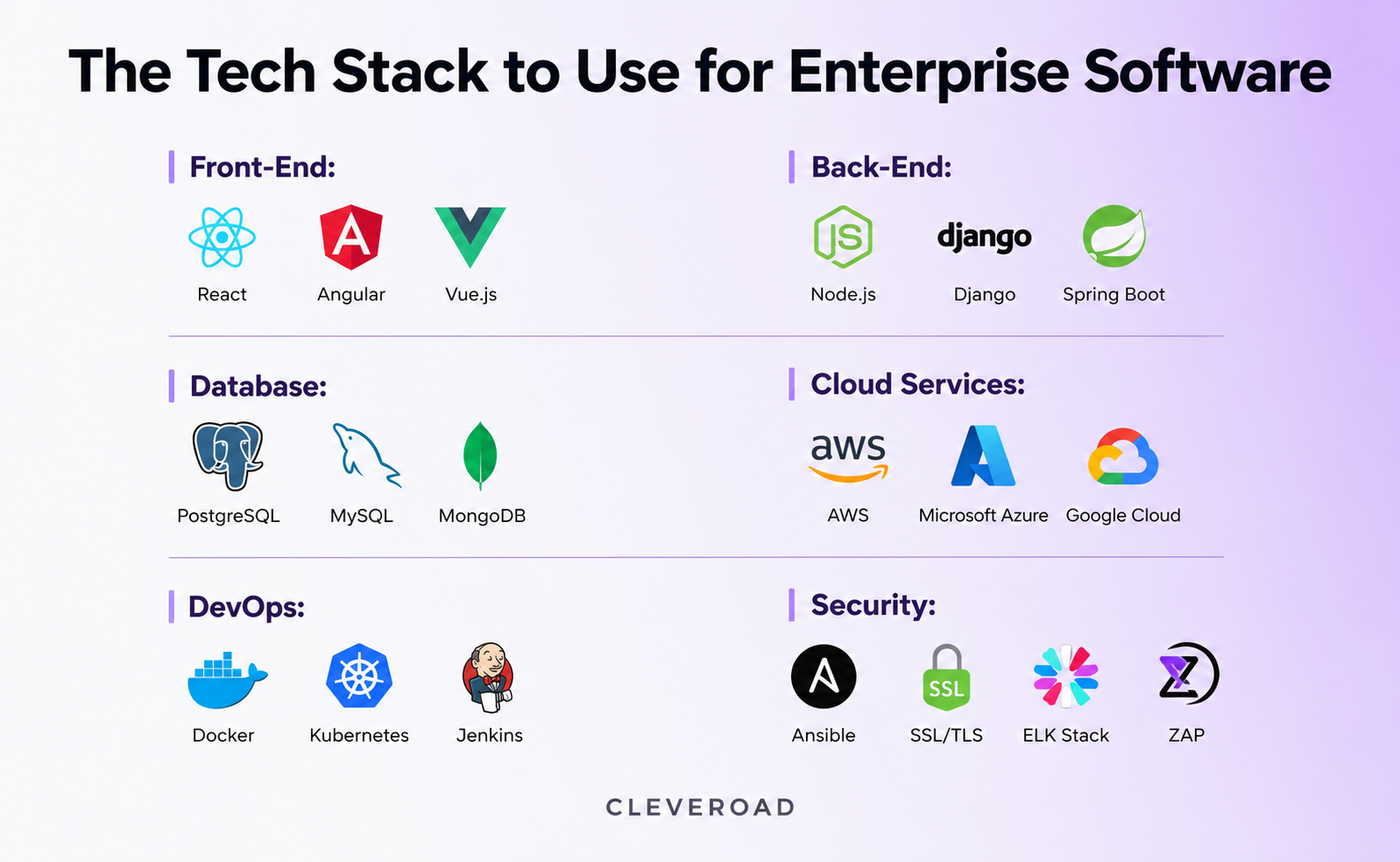
Technologies Used in Modern Custom Software Development
Leading custom software development companies use modern technologies to build scalable applications.
**Frontend**
- React
- Next.js
- Angular
- Vue.js
**Backend**
- Node.js
- Python
- Java
- .NET
**Mobile**
- Flutter
- React Native
- Swift
- Kotlin
**Database**
- PostgreSQL
- MongoDB
- MySQL
**Cloud**
- AWS
- Microsoft Azure
- Google Cloud Platform
**DevOps**
- Docker
- Kubernetes
- Jenkins
- GitHub Actions
Industries We Serve
Custom software development supports organizations across various industries.
- Healthcare
- Finance
- Retail
- Manufacturing
- Education
- Logistics
- Real Estate
- Travel
- Hospitality
- Government
- Insurance
- eCommerce
Each industry has unique requirements, and custom software ensures solutions are built to meet those needs.
Why Choose a Custom Software Development Company?
Working with an experienced custom software development partner offers several advantages.
Experienced Team
Access to developers, designers, QA engineers, DevOps specialists, and project managers.
Agile Development
Rapid iterations, transparency, and continuous improvement throughout the project lifecycle.
Scalable Solutions
Applications are designed to handle future business growth without requiring major redevelopment.
Security-First Development
Modern security standards help protect business data and customer information.
Long-Term Support
Ongoing maintenance ensures software remains secure, updated, and aligned with evolving business needs.
Why Choose Synctech?
At Synctech, we develop secure, scalable, and future-ready software solutions that help businesses accelerate digital transformation.
Our services include:
- Custom Software Development
- Web Application Development
- Mobile App Development
- SaaS Development
- Enterprise Solutions
- CRM & ERP Development
- API Development & Integration
- Cloud Solutions
- AI Development Services
- Software Maintenance & Support
Our team combines technical expertise with business understanding to deliver solutions that drive measurable results.
Future Trends in Custom Software Development
The custom software development industry continues to evolve with emerging technologies.
Key trends include:
- Artificial Intelligence integration
- Generative AI applications
- Low-code and no-code platforms
- Cloud-native development
- Serverless architecture
- Internet of Things (IoT)
- Blockchain integration
- Cybersecurity-first development
- DevSecOps
- Hyperautomation
Businesses adopting these technologies will be better positioned for long-term growth and innovation.
Conclusion
Choosing a custom software development company is a strategic investment that enables businesses to build solutions tailored to their unique needs. Unlike generic software, custom applications improve efficiency, strengthen security, support scalability, and provide a competitive advantage.
Whether you need a web application, enterprise platform, CRM, SaaS product, or AI-powered solution, partnering with an experienced development company ensures your software is built for long-term success.
As digital transformation continues to reshape industries, investing in custom software is one of the most effective ways to improve operations, enhance customer experiences, and accelerate business growth.
Ready to translate these insights into real operational efficiency?
Let's design and build your custom web applications, SaaS dashboards, or CRM integrations. Reach out to our solutions architect desk for a free feasibility review.
Frequently Asked Questions
Custom software development is the process of designing, building, and maintaining software tailored specifically to a business's unique requirements and workflows.
Custom software provides better flexibility, scalability, security, and integration capabilities while aligning closely with specific business goals.
The timeline depends on project complexity, features, integrations, and team size. Simple projects may take a few months, while enterprise applications can require longer development cycles.
Popular technologies include React, Next.js, Node.js, Python, .NET, Java, Flutter, React Native, PostgreSQL, MongoDB, AWS, Azure, Docker, and Kubernetes.
Look for a company with proven experience, a strong portfolio, transparent development processes, technical expertise, post-launch support, and the ability to understand your business objectives before recommending solutions.